
Revolutions are often remembered for the moment the walls fall.
The Handmaid’s Tale Season 6 chooses to remember something else: what happens to the people who are still standing after the smoke clears.
This final season is not obsessed with victory. It is obsessed with aftermath.
When the Fight Ends, the Pain Does Not
For years, the characters of The Handmaid’s Tale lived in crisis mode — every day about survival, escape, and resistance. Season 6 quietly shifts the emotional focus: it asks what becomes of people who no longer know how to live without danger.
June, Luke, Moira, and others carry trauma that does not vanish when the enemy weakens.
Nightmares replace uniforms.
Silence replaces gunfire.
The series refuses to suggest that freedom automatically brings peace. Instead, it shows that survival rewires the mind — and healing requires more courage than fighting ever did.

June Osborne and the Burden of Being “The One Who Survived”
In the final season, June is surrounded by people who see her as a hero. But the camera never lets her forget something more brutal: many others did not make it.
Survivor’s guilt becomes her quiet companion.
Her decisions, once fueled by rage and instinct, now feel heavier, slower, and more conflicted. Every victory is measured against the people who paid for it.
Season 6 presents leadership not as glory, but as responsibility that never truly ends.
June does not ask, “Did we win?”
She asks, “Was it worth who we lost?”

Gilead’s Greatest Weapon Was Never Fear — It Was Normalization
One of the most disturbing ideas Season 6 reinforces is that Gilead did not survive for years because everyone believed in it — but because people learned how to live with it.
Aunt Lydia’s arc becomes a painful mirror to this truth. Her justifications, routines, and sense of duty once felt like order. Now they look like quiet participation in horror.
The season suggests that authoritarian systems thrive not only through violence, but through ritual, bureaucracy, and moral fatigue — when outrage becomes too exhausting to sustain.
And undoing that damage takes longer than tearing down buildings.

Serena Joy: A Woman Trapped by Her Own Ideology
Serena’s story in Season 6 is not about redemption — it is about reckoning.
She wanted power.
She wanted protection.
She wanted to matter.
What she receives instead is isolation, suspicion, and a world that no longer needs her ideology — but also does not forgive it.
The show refuses to let Serena fully escape responsibility, yet it also refuses to portray her as purely evil. She becomes the embodiment of a terrifying reality: people can both suffer under a system and still be guilty of creating it.
Her fate is not tragic because she is innocent.
It is tragic because she is not.

The Series’ Most Honest Message: Justice Is Imperfect
Unlike traditional dystopian finales, Season 6 does not offer a clean moral scoreboard.
Some perpetrators avoid punishment.
Some victims never receive justice.
Some alliances are born out of necessity, not forgiveness.
This moral ambiguity is deliberate. It reflects real history, where political collapse rarely delivers emotional closure, and accountability is often selective and incomplete.
What the season ultimately argues is not that justice always wins — but that the pursuit of justice still matters, even when the outcome is flawed.

Why This Ending Feels So Unsettling — and So Right
There is no triumphant anthem playing over a perfect future.
Instead, Season 6 ends with uncertainty, cautious rebuilding, and people who are still learning how to exist without fear shaping every decision.
And that discomfort is the point.
Because The Handmaid’s Tale was never meant to be a fantasy about overthrowing evil.
It was always a warning about how easily evil becomes routine — and how painfully slow the path back to humanity can be.
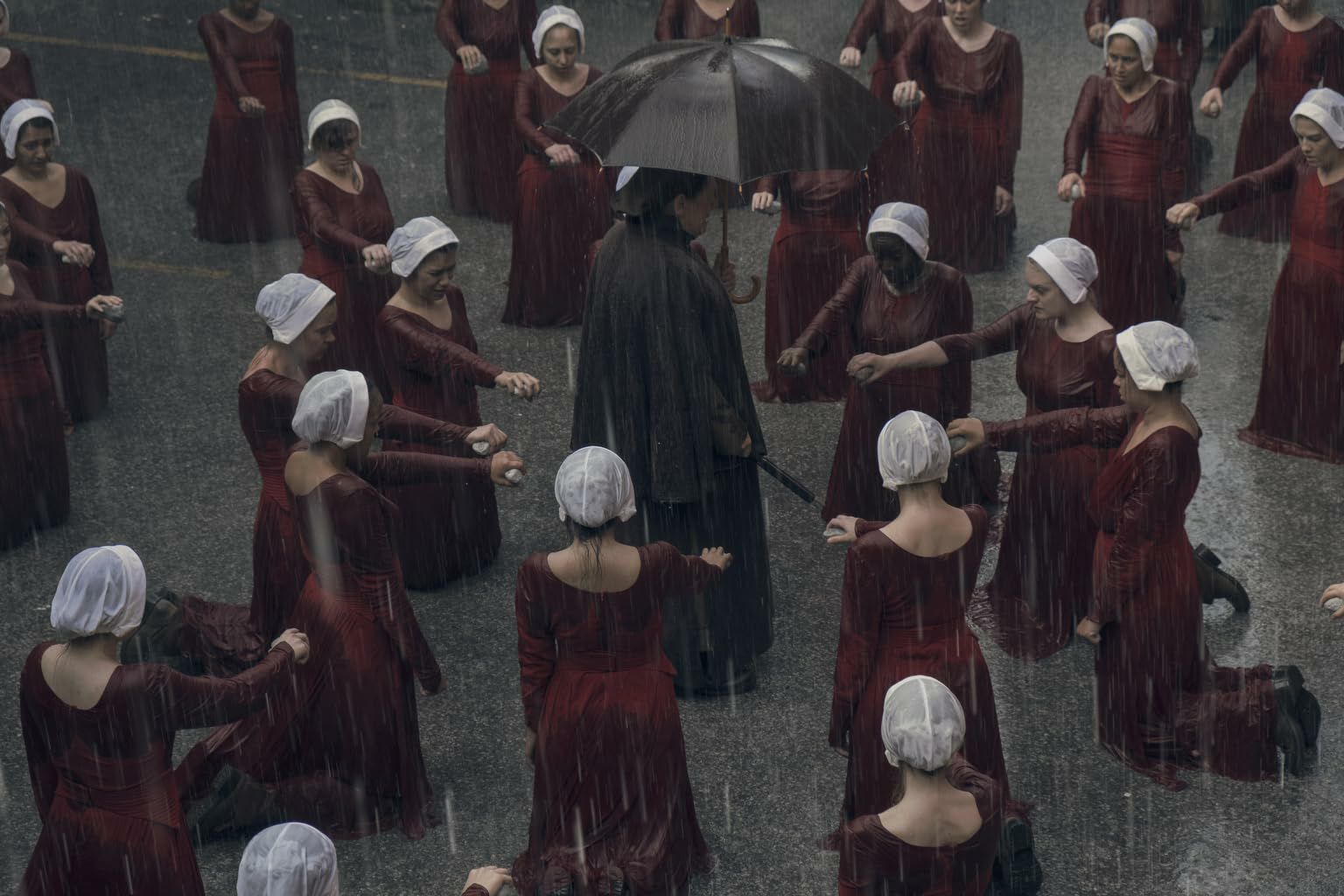
Final Reflection
Season 6 does not ask viewers to celebrate.
It asks them to remember.
To remember how fragile rights are.
How quickly systems can turn cruel.
And how resistance often looks less like heroism and more like exhaustion mixed with stubborn hope.
In the end, The Handmaid’s Tale leaves behind not a victory story, but a survival story — and perhaps that is the most honest ending it could offer.