
From its very first frame, Taboo was never just a revenge story. It was a portrait of empire at its most ruthless — a world where trade routes mattered more than lives, and where survival required moral compromise at every turn. As the long-awaited second season moves closer to reality, the question is no longer simply when it will arrive, but what kind of reckoning it will deliver.
A Series About Systems, Not Just Men
At its core, Taboo is a study of institutions as much as individuals. The East India Company, the Crown, criminal syndicates, and colonial interests all operate as competing engines of power, grinding down anyone caught between them.

James Delaney may be the focal point, but he is never truly free. His choices are shaped by forces far older and more brutal than personal vendettas. Season 2 is expected to continue exploring how individual ambition collides with imperial machinery — and how even the most ruthless players are often just pieces on a much larger board.
In this sense, Taboo feels less like a conventional drama and more like political tragedy.
Trauma as a Driving Force

What separates Delaney from typical anti-heroes is not simply his violence, but his psychological scars. His silence, his rituals, and his obsession with control all suggest a man shaped by experiences that were never meant to be survived.
Season 1 offered only fragments of his past, letting trauma exist as atmosphere rather than exposition. That restraint gave the series much of its haunting power — and Season 2 is widely expected to continue treating Delaney’s history as something that bleeds into the present, not something that can be neatly explained.
Here, trauma is not backstory.
It is destiny in motion.

Expansion Without Escape
While fans often speculate about new territories and broader horizons, Taboo has never equated travel with freedom. Crossing oceans does not erase guilt, nor does it remove political consequence.
Wherever Delaney goes, systems of exploitation follow. New ports simply mean new masters, new alliances, and new forms of betrayal. Rather than offering reinvention, Season 2 is more likely to expose how deeply empire reaches — and how impossible it is to step outside its shadow.
In the world of Taboo, geography changes.
Power does not.
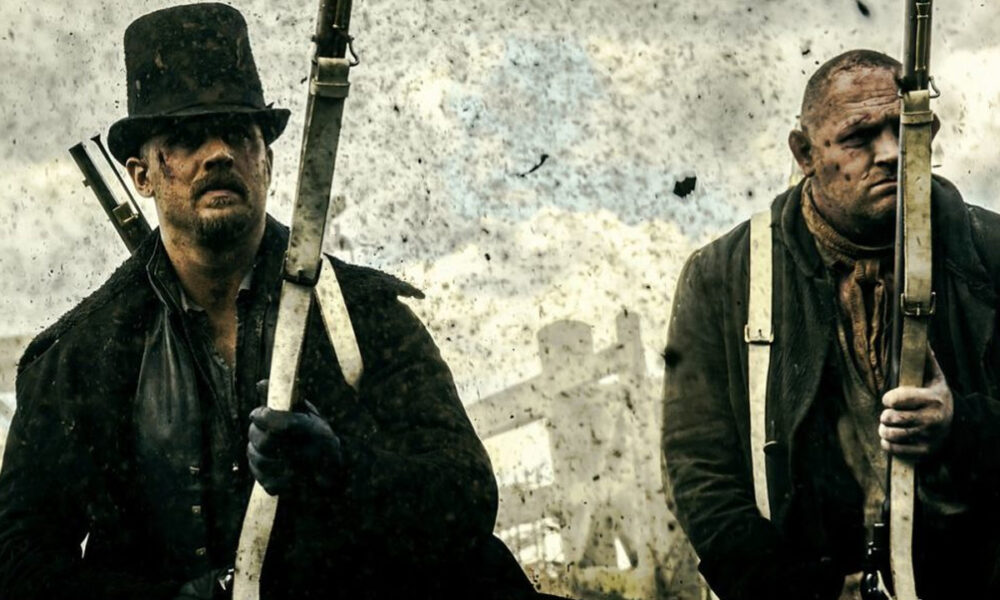
Moral Ambiguity as Identity
Unlike many prestige dramas that eventually soften their protagonists, Taboo refuses comfort. Delaney is not framed as a misunderstood hero, but as a dangerous and often ruthless operator.
Yet the series does not present him as a villain either. Instead, it places him in a system so corrupt that moral purity becomes almost meaningless. The question is no longer whether Delaney is good or evil, but whether such distinctions survive in a world built on conquest and profit.
Season 2 is poised to press this dilemma even further:
Is Delaney resisting empire — or becoming one of its most efficient weapons?

Why the Long Wait May Be Part of the Design
The extraordinary gap between seasons has tested fan patience, but it also reflects the creators’ unwillingness to rush the story. Steven Knight has repeatedly emphasized narrative integrity, while Tom Hardy’s continued involvement suggests that character depth remains the priority over production speed.
In an industry driven by rapid cycles and constant content, Taboo stands apart — a series willing to risk silence rather than sacrifice its identity.
And perhaps that silence has only strengthened the myth.
Final Thought: A Reckoning Years in the Making
Empires fall, corporations rise, and history repeats itself — often with new faces and familiar methods. That is what gives Taboo its unsettling relevance.
Season 2 will not simply continue a plot left unfinished. It will return to a world where power is currency, loyalty is temporary, and survival always demands a price.
For those who followed James Delaney into the fog once before, this is not merely a sequel.
It is a reckoning long overdue.