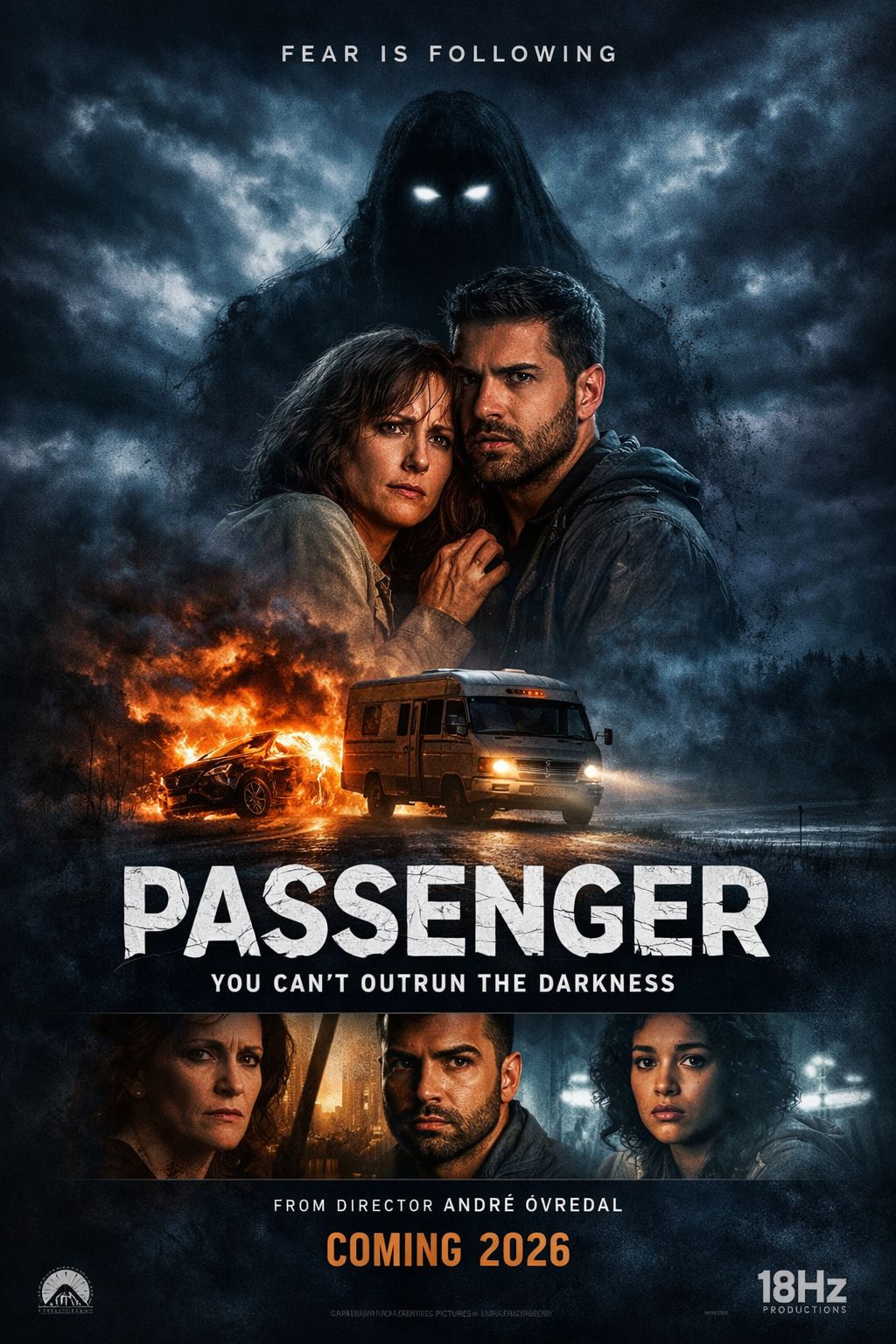
Hollywood has long understood that true horror does not always live in haunted houses—it travels with us. In Passenger (2026), director André Øvredal, the visionary behind The Autopsy of Jane Doe and Scary Stories to Tell in the Dark, returns with a chilling supernatural thriller that transforms isolation, guilt, and the unknown into a relentless, suffocating force. Scheduled for release on May 29, 2026, by Paramount Pictures, the film promises to deliver a tense and psychologically haunting experience that lingers long after the final frame fades.
A Journey That Should Have Been Ordinary
At its core, Passenger begins with a deceptively simple premise. A couple living on the margins of society—traveling in a van, untethered from permanent roots—witness a horrific fatal accident on a desolate road. It is a moment that fractures their fragile reality. What begins as shock quickly mutates into something far more sinister: the creeping realization that they are no longer alone.

Something has followed them.
It does not knock. It does not speak. It simply remains—watching, waiting, and drawing closer with each passing mile.
As the couple attempts to escape, the road itself becomes a prison. Every shadow stretches longer. Every stop feels dangerous. The line between coincidence and supernatural inevitability dissolves into terror.
André Øvredal’s Signature: Slow-Burn Terror with Emotional Depth
Director André Øvredal has built a reputation for crafting horror that is not driven solely by jump scares, but by atmosphere and psychological dread. In Passenger, he appears to double down on that philosophy.
Øvredal understands that the most terrifying force is not always what is seen—but what is felt.
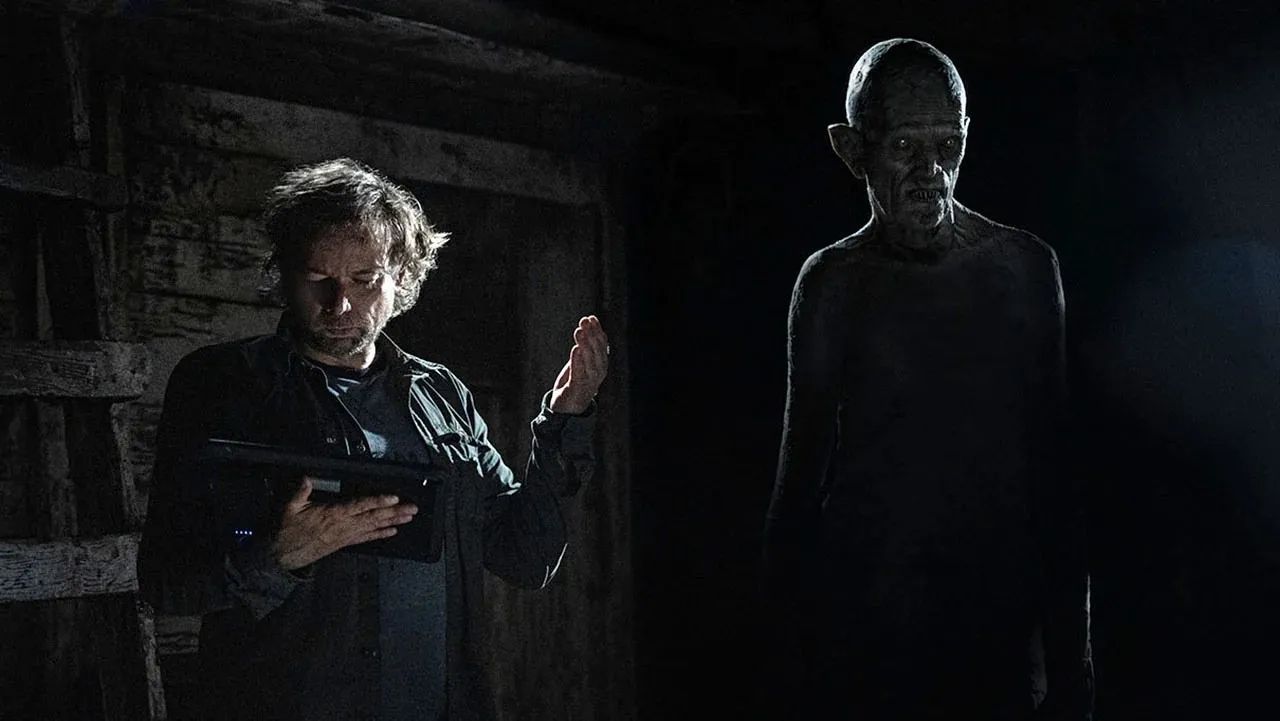
Through confined spaces, lingering camera movements, and an overwhelming sense of isolation, the film traps viewers alongside its characters. The van becomes more than a vehicle; it becomes a fragile sanctuary surrounded by an invisible predator.
This approach echoes the suffocating intimacy of The Autopsy of Jane Doe, while expanding into a broader, existential nightmare about guilt, consequence, and survival.
A Cast Anchored in Emotional Realism
Academy Award winner Melissa Leo, known for her raw and commanding performances, leads the cast alongside Lou Llobell and Jacob Scipio. Their characters are not traditional horror archetypes—they are wounded, human, and vulnerable.
This emotional grounding is essential. In Passenger, the horror does not simply attack their bodies; it invades their minds. Fear becomes internal as much as external. Trauma becomes a doorway.
The audience is forced to confront the terrifying possibility that the true horror may not be the entity itself—but what it represents.

Horror Rooted in Inevitability
Unlike conventional supernatural thrillers, where escape remains possible, Passenger suggests something far more disturbing: inevitability.
The entity does not rush. It does not need to.
It follows patiently, relentlessly, as if guided by forces beyond time and logic.
This quiet persistence creates a suffocating tension. Every moment of calm feels temporary. Every mile traveled feels meaningless.
The road stretches forward—but freedom never comes closer.

A New Chapter in Modern Supernatural Cinema
Produced under Paramount Pictures with horror veteran Walter Hamada involved in the production, Passenger arrives during a resurgence of elevated horror—films that merge emotional storytelling with supernatural terror.
Rather than relying on spectacle alone, the film appears to explore deeper themes:
-
The burden of witnessing death
-
The psychological cost of survival
-
And the terrifying possibility that some encounters cannot be escaped
It is horror rooted not in fantasy, but in consequence.
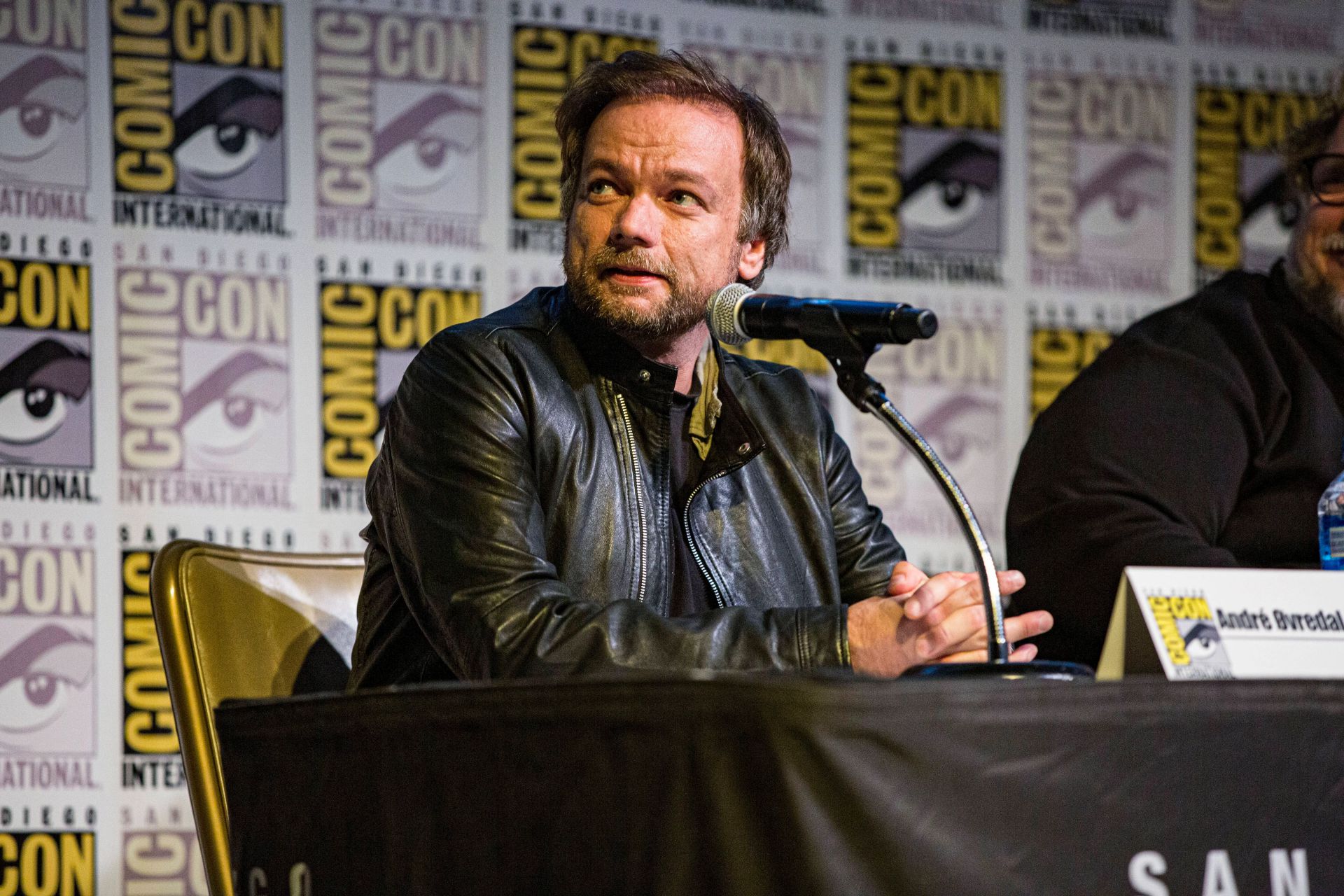
The Fear That Travels With You
With its haunting premise, atmospheric direction, and emotionally grounded performances, Passenger (2026) positions itself as one of the most intriguing supernatural thrillers of the year.
It is not just a story about being chased.
It is a story about being chosen.
Because sometimes, the most terrifying passenger is not the one sitting beside you—
—but the one that refuses to leave.