Introduction
In the age of global entertainment spectacles, Hannah Montana: The Movie 2 (2026) is imagined not just as a sequel—but as a cultural event. This version leans fully into the scale, energy, and emotional power of a worldwide comeback story, combining cinematic storytelling with the electrifying experience of a live concert film.
Building on the legacy of Hannah Montana: The Movie, this interpretation transforms the narrative into a high-stakes return to the stage—one that blurs the line between performance and reality.
This is not just a story about revisiting the past. It is about reclaiming it on the biggest stage possible.
Plot Overview
The world has changed, and so has Miley Stewart. Now one of the most recognizable artists on the planet, she has spent years building a career that stands apart from Hannah Montana.
But as global trends begin to shift toward nostalgia-driven content, a powerful opportunity emerges: a streaming giant proposes a once-in-a-lifetime event—a global Hannah Montana comeback tour, broadcast live to millions.
At first, Miley refuses. She has worked hard to move beyond that identity. Returning to Hannah feels like undoing years of growth.
However, the stakes quickly rise.
The deal is more than just a concert. It is a massive production involving international stages, cutting-edge technology, and a narrative built around Hannah Montana’s legacy. Fans across the world demand it. Media outlets fuel the anticipation. The pressure becomes impossible to ignore.
Reluctantly, Miley agrees—but on one condition: this will be the final performance.
As preparations begin, the scale of the project becomes overwhelming. Massive rehearsals, global marketing campaigns, and creative disagreements push Miley to her limits. The return of Hannah Montana is no longer just a performance—it is a global expectation.
Behind the scenes, tensions rise. Creative teams want the “classic” Hannah. Producers want viral moments. Fans want nostalgia. Miley wants authenticity.
As opening night approaches, the question becomes unavoidable:
Can she deliver the Hannah Montana the world remembers without losing the person she has become?

The Spectacle Element
This version of the film is defined by its scale.
The concert sequences are designed as cinematic centerpieces, featuring:
-
Multi-stage performances across different cities
-
Advanced visual effects blending holograms and live performance
-
Real-time audience interaction through digital platforms
Each performance is more than entertainment—it is storytelling. Songs are reimagined to reflect Miley’s journey, creating a narrative arc that unfolds through music.
The final show serves as the emotional climax, combining past and present into one defining moment.

Themes
The Ownership of Identity
One of the central conflicts in this version is the question of ownership. Does Hannah Montana belong to Miley, or to the audience that made her famous?
The film explores the tension between personal identity and public expectation, showing how difficult it is to separate the two.
Fame as Performance
In this story, fame is portrayed as something inherently performative. Even authenticity becomes a form of performance when millions of people are watching.
Miley’s struggle is not just about being herself—it is about defining what “being herself” even means on a global stage.
Closure and Legacy
Unlike other interpretations, this version emphasizes closure. The comeback is framed as a final chapter, allowing Miley to take control of her narrative and decide how her story ends.
Character Dynamics
Miley Stewart
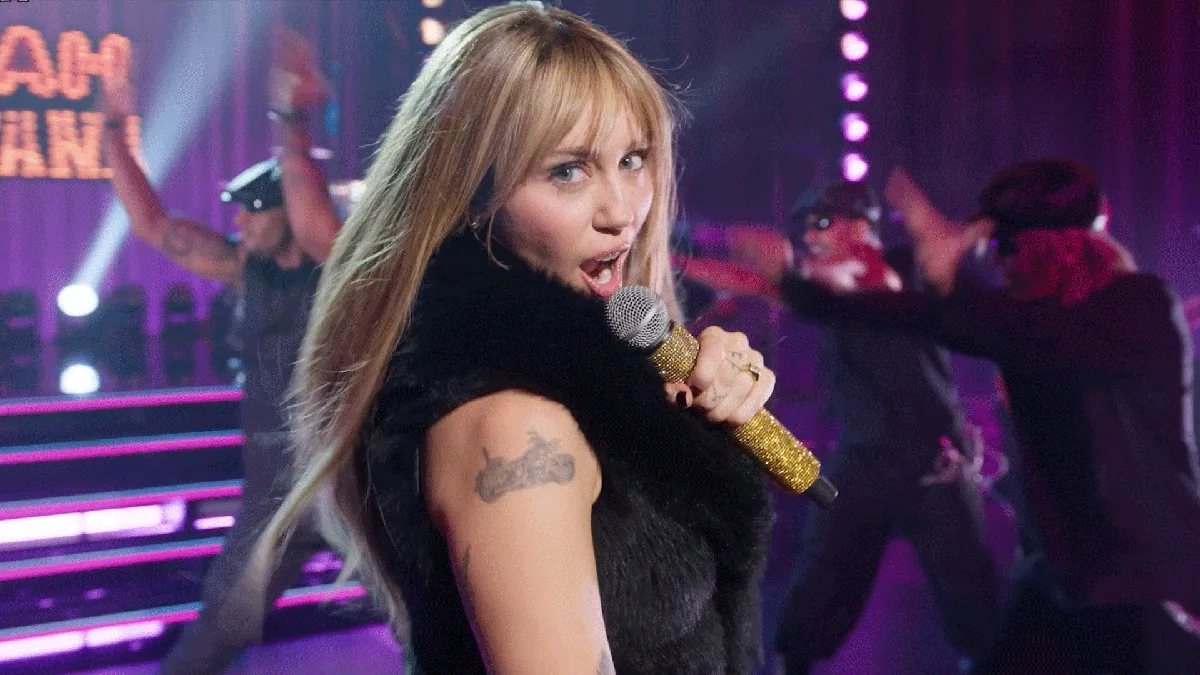
Miley is portrayed as a seasoned artist who understands the industry but is still vulnerable to its pressures. She is confident, driven, and determined—but also conflicted.
Her journey is about taking control of her story in a situation where control is constantly challenged.
Industry Figures
Producers, managers, and media figures play a larger role in this version, representing the external forces that shape Miley’s decisions.
They add tension and realism, highlighting the business side of fame.
Global Audience
The audience itself becomes a character. Through social media reactions, live broadcasts, and fan interactions, the film captures the collective voice of millions.
This reinforces the idea that Hannah Montana is bigger than any one person.
Music and Cultural Impact
Music is the driving force behind the film’s viral potential.
The soundtrack would likely include:
-
High-energy remixes of classic hits
-
Brand-new anthems designed for stadium performances
-
Emotional closing songs that reflect Miley’s personal journey
The film’s release could be synchronized with real-world music drops, creating a cross-platform cultural moment.
Visual and Directorial Style
Visually, this version is bold, modern, and cinematic.
Key elements include:
-
Large-scale stage design inspired by real-world global tours
-
Dynamic camera work that captures both intimacy and масштаб
-
Seamless transitions between backstage drama and onstage spectacle
The contrast between private moments and public performances adds emotional depth.
Why This Version Is Highly Viral
This interpretation is built for maximum audience engagement.
It combines:
-
Nostalgia with modern production value
-
Emotional storytelling with large-scale entertainment
-
A strong central figure with global appeal
In today’s content landscape, event-style films generate massive attention, especially when tied to music and celebrity culture.
SEO Keywords
-
Hannah Montana The Movie 2 2026
-
Miley Cyrus comeback movie
-
Hannah Montana concert film
-
Disney musical sequel 2026
-
Hannah Montana global tour movie
Final Thoughts
This version of Hannah Montana: The Movie 2 (2026) reimagines the sequel as a global entertainment event. It is not just a continuation of a story—it is a celebration, a confrontation, and a farewell all at once.
By combining emotional depth with spectacular visuals and music-driven storytelling, it offers a powerful and memorable experience.
If such a film were ever produced, it would have the potential to dominate not only the box office, but also global conversation—turning a nostalgic franchise into a modern cultural phenomenon.
In the end, the story asks one final question:
When the spotlight fades, who are you without the stage?
And for Miley Stewart, the answer may finally be her own.